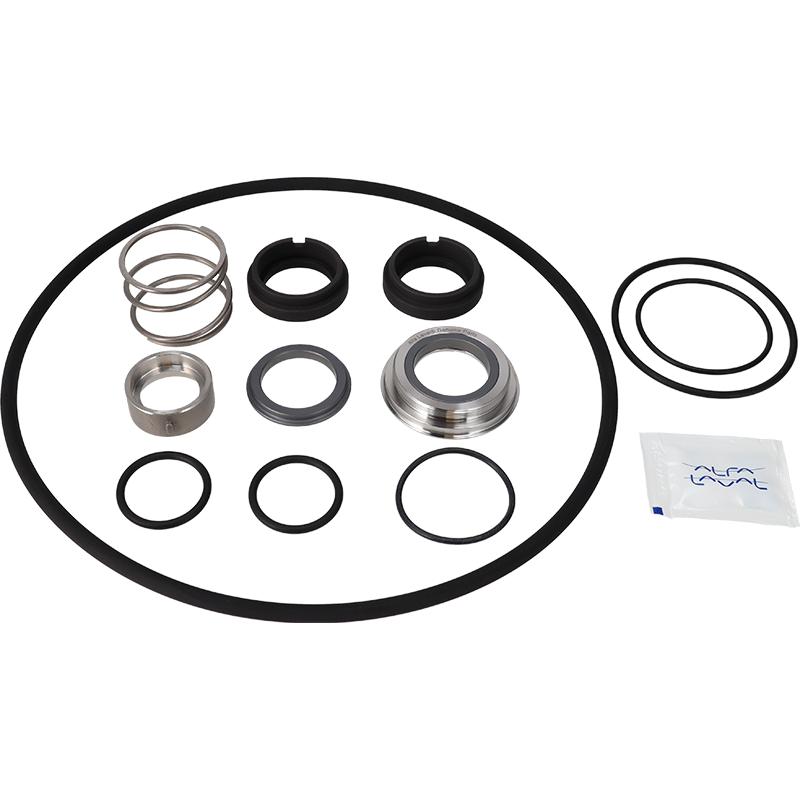
Mechanical seals are small components, but they can create big problems when they fail. In a perfect setup, a seal wears evenly over time and is replaced during planned maintenance. In real food and beverage production, seals often fail much sooner because of dry running, chemical attack, product buildup, poor installation, or pressure spikes.
Improving your equipment reliability and increasing MTBR — Mean Time Between Repair — starts with understanding why the seal failed in the first place. Replacing the seal without finding the root cause usually means the same problem will come back.
1. Dry Running
Mechanical seals need lubrication between the seal faces. That lubrication usually comes from the product being pumped or from a seal flush. When a pump runs without product, even for a short time, the seal faces can heat up very quickly.
This can happen when a pump is started before the line is full, when a tank runs low, or when air gets pulled into the system.
What you may see: Cracked, burned, or heat-damaged seal faces.
How to prevent it: Use low-level controls, flow switches, or other safeguards to help make sure the pump does not run dry.
2. Chemical Compatibility Issues
In sanitary processing, it is not enough to choose a seal material based only on the product. You also need to look at the cleaning process. CIP chemicals, sanitizers, oils, temperatures, and washdown conditions can all affect seal materials.
For example, an elastomer that works well with the product may not hold up during cleaning. Over time, the O-rings can swell, harden, crack, or become sticky, which keeps the seal from moving the way it should.
What you may see: Swollen, brittle, cracked, or gummy O-rings.
How to prevent it: Review both the product and the cleaning process when selecting seal materials. EPDM, FKM/Viton, Kalrez, and other elastomers all have different strengths and limitations.
3. Abrasive Products and Crystallization
Some products are naturally hard on seals. Sugar syrups, chocolate, fruit products, powders in solution, and other sticky or abrasive products can build up around the seal area. If product dries or crystallizes near the seal faces, those particles can act like sandpaper.
Once the faces are scored, leakage usually follows.
What you may see: Scratched or grooved seal faces and repeat leaking.
How to prevent it: Consider a flush, quench, or double mechanical seal arrangement where needed. Keeping the seal area clean can greatly reduce wear and buildup.
4. Installation and Handling Problems
Mechanical seal faces are extremely precise. Dirt, fingerprints, scratches, or improper handling can create a leak path before the pump even goes back into service.
Many early seal failures happen not because the seal was wrong, but because it was damaged or contaminated during installation.
What you may see: A new seal leaking immediately or shortly after startup.
How to prevent it: Handle seal faces carefully, use clean gloves, and follow the correct installation procedure. Cartridge seals can also help reduce installation errors because they are pre-set and easier to install correctly.
5. Pressure Spikes and Water Hammer
Sudden pressure changes can damage seals quickly. Rapid valve closures, abrupt pump speed changes, or hydraulic shock in the line can force seal faces open or damage the seal hardware.
Hard seal faces, such as silicon carbide, are strong but can still chip or crack under the wrong conditions.
What you may see: Broken seal faces, damaged springs, distorted metal parts, or sudden leakage after a pressure event.
How to prevent it: Use VFDs for controlled starts and stops, review valve timing, and consider slow-closing automated valves where hydraulic shock is a concern.
Building a Better Seal Reliability Plan
Moving from emergency repairs to planned maintenance takes more than keeping spare seals on the shelf. A good seal program should include:
Watch for vibration. Shaft movement, misalignment, or bearing issues can shorten seal life quickly. If the shaft is not running true, the seal will struggle to do its job.
Review the flush setup. Make sure flush lines are open, clean, and operating at the correct pressure for the application.
Standardize spare parts. Keeping the correct seal kits and elastomers on hand helps avoid installing the wrong material just because it is available.
Look at the failed parts. A failed seal can tell a story. Cracks, scoring, swelling, or buildup can all point to the real cause of the problem.
At Stuart W. Johnson & Company, we have been helping food, dairy, and beverage processors keep production running for over 75 years. From pumps and seals to parts, service, and application support, our team understands how critical reliable equipment is to your operation.
As an Alfa Laval Master Distributor and Service Center, we bring deep product knowledge and factory-backed support. But our service does not stop with Alfa Laval. We can help troubleshoot, repair, and support many pump brands used across sanitary processing environments.
If your team is replacing the same seals over and over, it may be time to look deeper than the part number. Our team can help review the application, identify common failure points, and recommend options to improve seal life, reduce downtime, and keep your production moving.
Stuart W. Johnson & Co.
Helping keep sanitary processing equipment running for over 75 years.